Israeli defense minister suggests role in Syria airstrike
Ehud Barak's remarks Sunday appeared to be the first public comment by an Israeli official on the incident.
STORY HIGHLIGHTS
- Officials have said an Israeli airstrike hit Syria last week, but Israel has been tight-lipped
- Ehud Barak: "I cannot add anything to what you've read in the newspapers"
- No one should "bring advanced weapons systems into Lebanon," Barak says
- His remarks appear to be the first public comment on the incident by an Israeli official
(CNN) -- A top Israeli official suggested Sunday that his government was behind an airstrike in Syria last week.
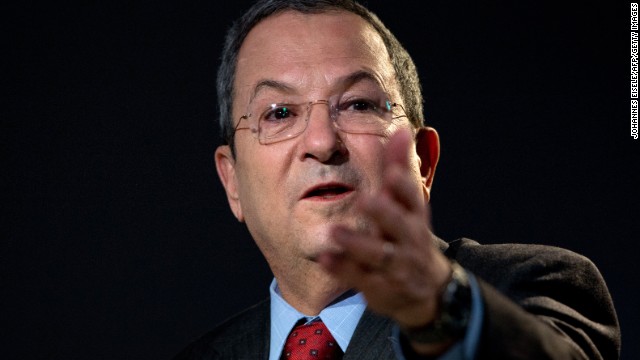
Israeli Defense Minister
Ehud Barak didn't explicitly confirm or deny his government's
involvement in the fighter jet attack, which a senior U.S. official has
said targeted a weapons convoy suspected of moving weapons to Hezbollah
in Lebanon.
But Barak's remarks at a
security conference in Munich, Germany, appeared to be the first public
comment by an Israeli official on the incident.
"I cannot add anything to
what you've read in the newspapers about ... what happened in Syria
several days ago, but I keep telling, frankly, that we've said -- and
that's another proof that when we say something we mean it -- we say
that we don't think that it should be allowable to bring advanced weapon
systems into Lebanon."
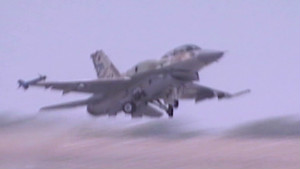 Talk of retaliation after Israeli strike
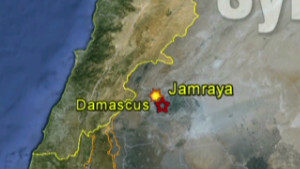 Syria: Israel bombed research facility
Word of Barak's remarks drew quick criticism from Syria's state-run SANA news agency.
"The statement is an
overt hint that the aggression came in implementation of the Israeli
threats uttered lately under the pretext of targeting 'a weapons
shipment,'" the Syrian government news agency said.
Syrian President Bashar
al-Assad and other government officials have said the Israeli airstrike
actually hit a defense research facility near Damascus, not a convoy. On
Sunday, al-Assad said Israel and hostile foreign powers are conspiring
"to destabilize and weaken Syria," SANA reported.
Barak said on Sunday
that keeping weapons out of Lebanon was a particular concern for his
country, and he also criticized al-Assad for a "terrible ... massacre of
his own people that's something unprecedented, even in tough
neighborhoods like ours."
In recent years, Syria
has transferred to Hezbollah Scud missiles that can carry chemical
weapons, but U.S. authorities say they do not believe last week's
airstrike was linked to growing concerns about Syria's chemical weapons,
a senior U.S. official said Wednesday.
Syrian officials have
demanded a U.N. response to the incident, which it said violates the
U.N. charter and the 1974 agreement between Syria and Israel, negotiated
after the Yom Kippur War.
U.N. Secretary-General
Ban Ki-moon's office issued a statement Thursday expressing "grave
concern" about the incident, but said U.N. officials lacked details
about exactly what had happened.
Syrian allies Russia and
Iran also condemned the reported attack. And Syria's ambassador to
Lebanon, Ali Abdul Karim, said Syria reserves the right to a "surprise
retaliation" against Israel, according to Hezbollah's official website,
Moqawama.


No comments:
Post a Comment